The best things in Costa Rica were made by hand, in rooms with the door open.
Clay fired in a village kiln, carts painted one petal at a time, masks cut from a single block of balsa. This is a plain guide to what each tradition is, where it tends to live, and how to walk into a workshop without being in the way.
Five traditions worth a detour
Costa Rica is small, and its crafts are unusually local. A tradition rarely spreads far from the village that carries it, which is why a day of driving can take you from fired clay to hand painted wood to carved masks without repeating yourself. What follows is a map of the main families, written so that you can recognise the work before you meet the maker.
Pottery from the Chorotega tradition
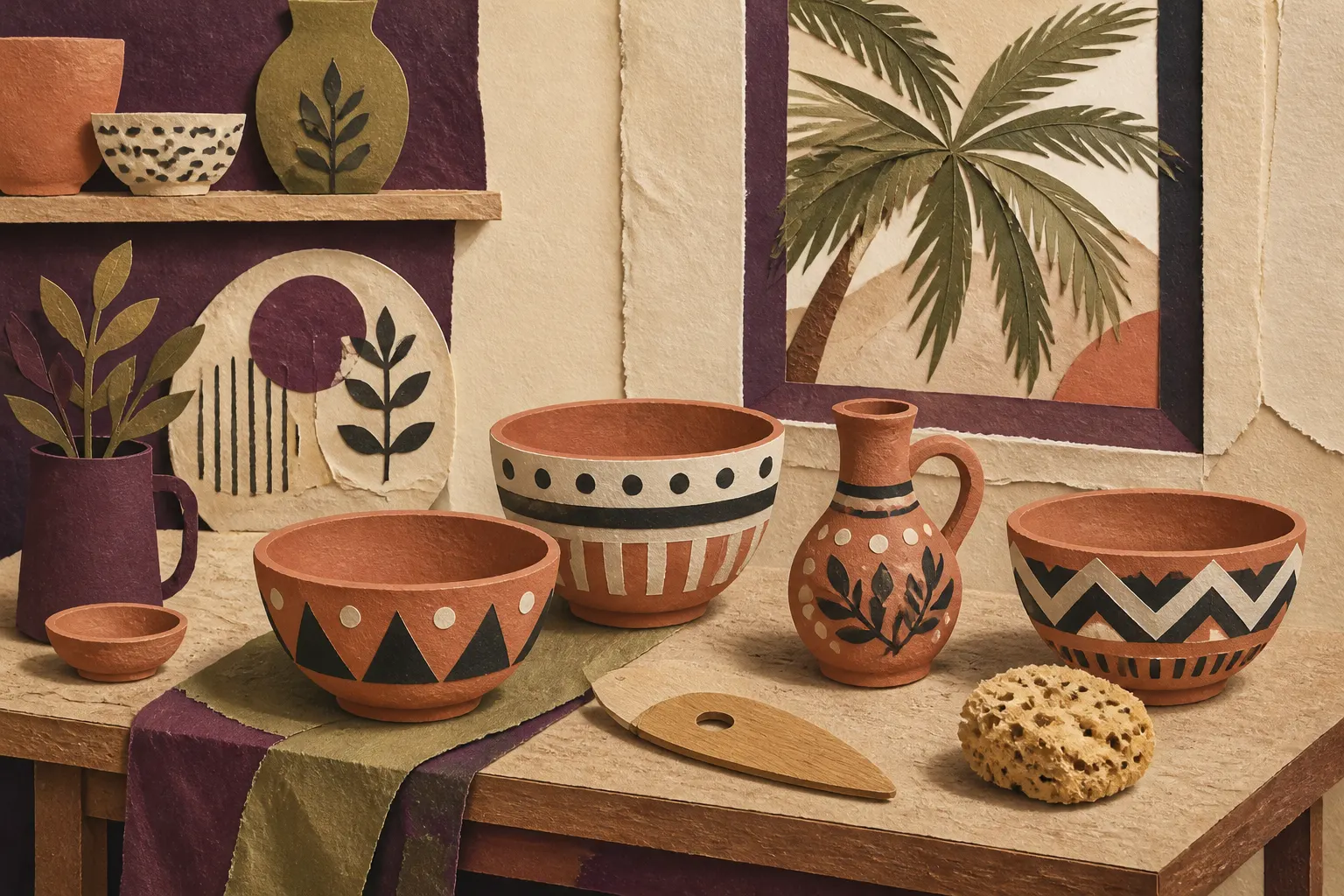
In and around the villages of Guanacaste, potters still shape clay by hand, without a wheel. The pieces are built up from coils or pinched from a lump, polished with a smooth stone, then painted with a mineral slip in cream, red and black. The patterns come from pre-Columbian designs: stepped lines, spirals and stylised animals. Firing is often done in a simple kiln or an open fire, which explains the soft, uneven blush on many pieces.
Painted ox carts
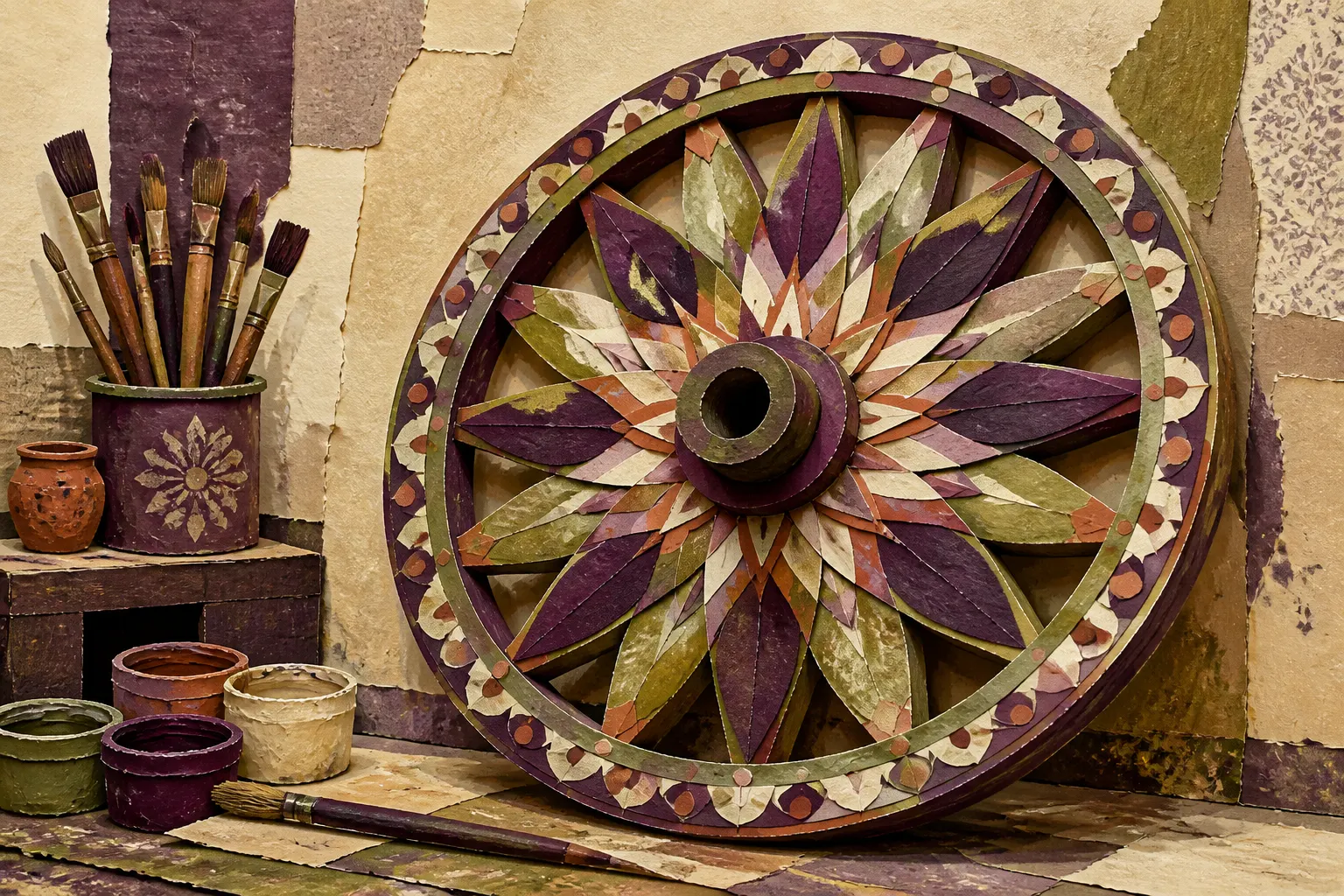
The ox cart is the national craft emblem. Around the town of Sarchí, workshops build the wheels, the frame and the side panels, then paint them in dense, radiating patterns of stars and flowers. Traditionally every cart carried its own design, so that an owner could be recognised on the road from far off. Today most pieces are small: a miniature cart, a painted panel, a stool. Watching a painter lay down the long petal strokes with a single brush is the best argument for visiting.
A good painted wheel has no ruler lines in it. Look for the small wobble that proves a steady hand.
Carved masks from the south
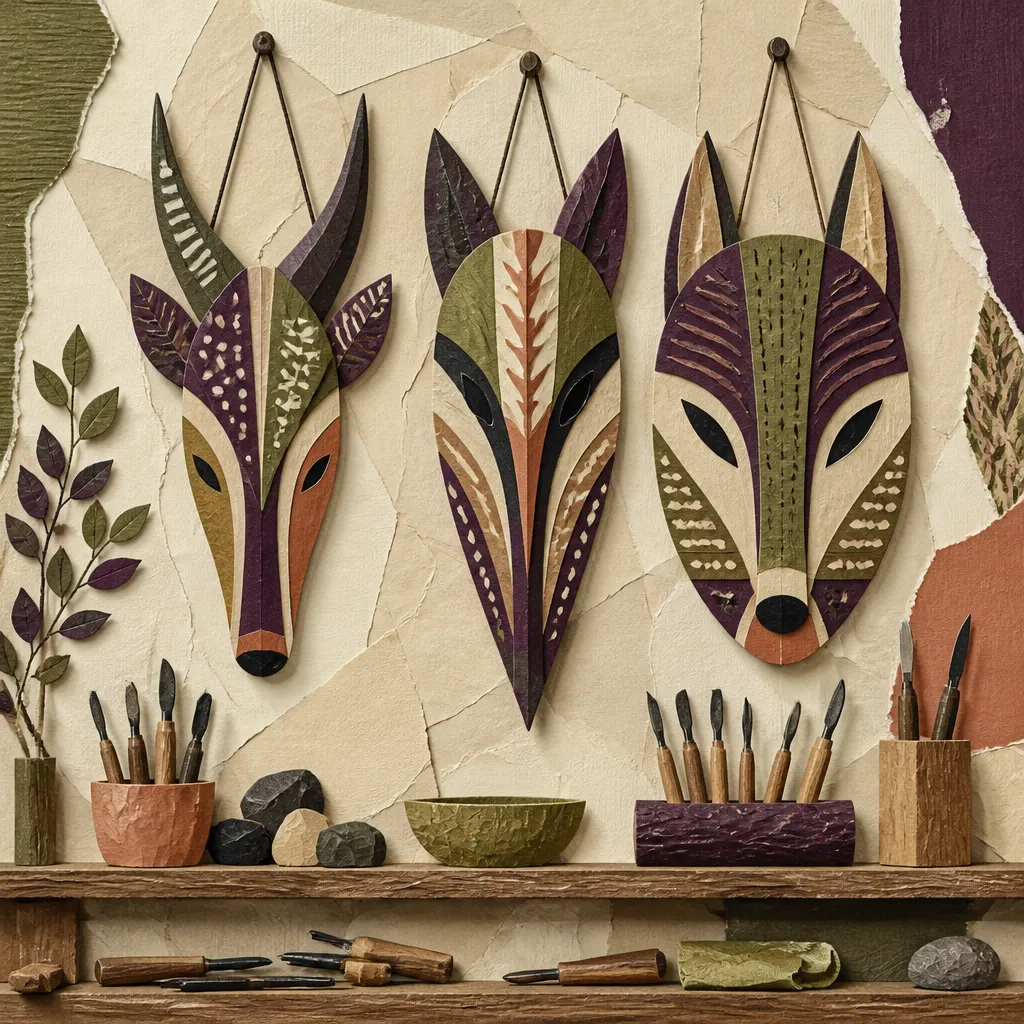
In the Boruca communities of the south Pacific zone, masks of balsa and cedar are carved and painted for a festival that marks the old resistance to the Spanish. Devil masks, animal masks and bull masks are the common forms. They are made from a single block, with a few elements left raw and the rest in bright acrylic or natural dye. Treat the festival as theirs: visit the workshops, buy from the makers, and leave the ceremony itself to the community.
Wood, seeds and fibre
Hardwoods such as cocobolo, guanacaste and laurel are turned into bowls, boxes and utensils across the country, usually sold by weight of craft rather than weight of timber. Look at the grain and the finish, and ask what species it is. Baskets, hammocks and bags woven from palm fibre, cabuya and cotton fill the markets, and in Indigenous territories you may still see backstrap loom weaving, where the weaver holds the tension with her own body.
Painters and galleries in the capital
San José is where the studio tradition lives. A handful of small galleries and cooperative spaces show contemporary painting, printmaking and ceramics, often in converted houses with a courtyard. Opening hours are shorter than you expect, and many close on Sundays and Mondays, so check before you cross the city.
Visiting a workshop without getting in the way
Think of an artisan's workshop as a workplace first and a point of interest second. The best visits are slow and a little unplanned: you arrive, you say good morning, you ask whether it is a convenient time, and you stand where you can see the table without blocking the light.
Plan for an hour. Less than that and you will feel rushed, more and you will have used the maker's whole morning. Many studios sit on unpaved roads, so a small car with decent clearance is plenty in the dry season, and a local driver is worth the money in the wet months when a track can turn to mud within an afternoon.
Bring small cash in colones. Card readers are less common outside the capital, and a maker who has just spent a morning with you should not have to chase a signal to be paid. Bring something to carry a purchase in too, and a little padding if you are buying ceramics.
Questions are welcome, and the good ones are practical. How is this fired? What is the wood? How long did this one take? Avoid asking for a discount before you have looked at the work, and never ask a maker to copy a design they are known for.
It helps to learn a few words of Spanish. Buenos días, con permiso, muchas gracias and cuánto cuesta cover most of a visit. People notice the effort and respond to it.
Dry months, green months, and the festival calendar
The year divides into a dry season, from about December to April, and a green season, from May to November, when afternoon rain is the rule. The Pacific side is the drier one and the Caribbean slope has its own pattern, with rain possible in almost any month.
For travelling between workshops, the dry months are simplest. Roads are firm, kilns fire without delay and open-air markets run at full strength. They are also the busiest months, so popular stops fill up on weekends.
The green season has its own appeal. Studios are quieter, makers have more time to talk, and mornings are generally clear enough for a visit before the rain arrives. Plan your outings early and keep the afternoon for the gallery or the market under a roof.
Local festivals can be wonderful and can also close a village for a day. Check the date of any fiesta before you plan a drive, and be ready to find a workshop shut because everyone is at the parade.
Clay behaves differently in humid weather: pieces dry slowly, and some potters pause firing during the heaviest rains. If a studio tells you nothing is ready, that is not a brush off. It is the weather.
Etiquette, buying well, and bringing it home
The simplest courtesy is to buy something, however small. A workshop visit takes the maker's time, and a postcard, a spoon or a small bowl is a fair way to say thank you. Nobody expects a large purchase, and nobody should be made to feel that one is required.
Ask about the materials. Reputable makers know what their work contains and will tell you plainly. Avoid pieces that include feathers, turtle shell, coral or untreated wood of uncertain origin, since these can be restricted both locally and when you reach your own border.
Authenticity is easier to judge than it seems. Souvenir shops sometimes stock identical pieces by the dozen, and a row of perfectly matching masks was not carved by hand. A handmade object carries evidence of its making, and a maker will usually show you how it was done if you ask.
Wrap fragile purchases carefully, and carry them in your hand luggage when you can. A clay jug survives the road far better in a sweater than in the bottom of a suitcase.
Finally, remember that a handful of traditions belong to Indigenous communities with their own customs. Ask before photographing people, stay off ceremonial ground, and let the community decide what is for sale and what is not.
Markets and the quiet value of browsing
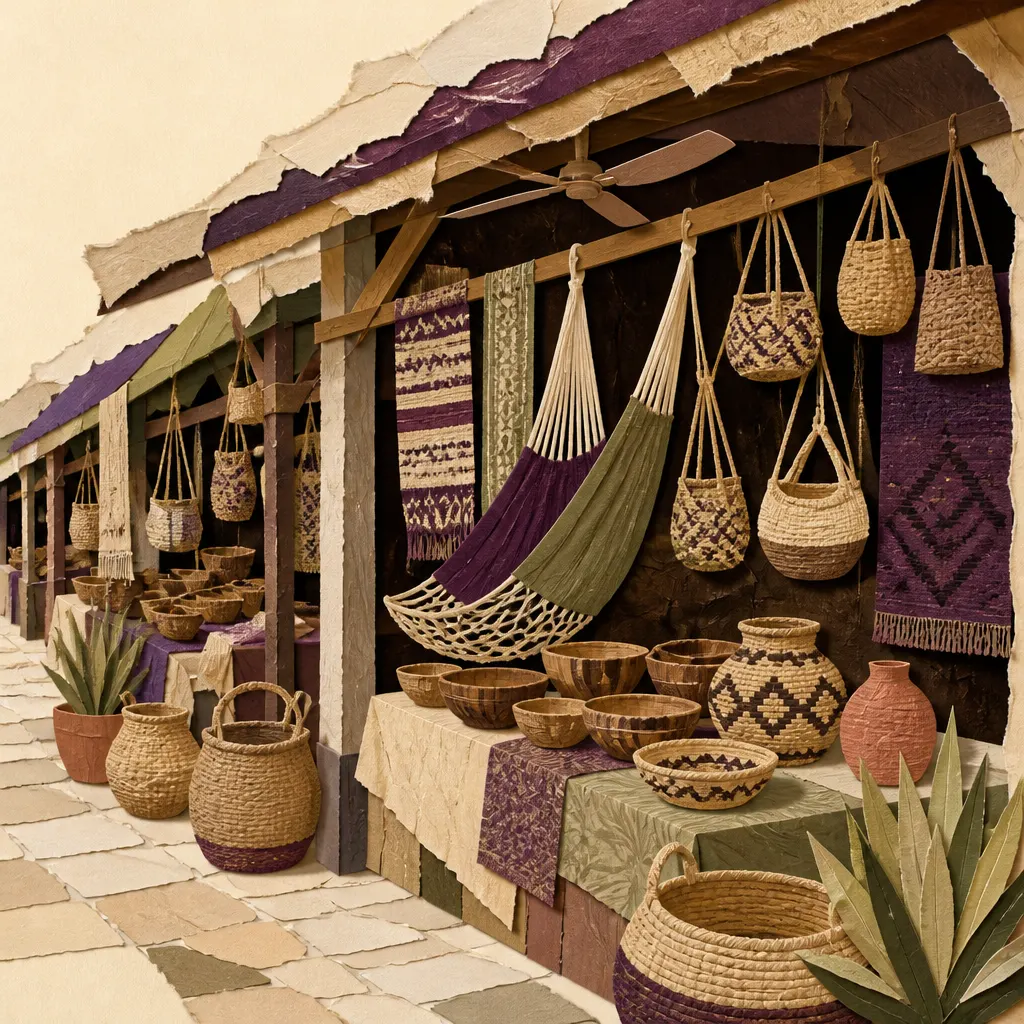
Not every worthwhile craft encounter happens in a studio. Weekend farmers' markets and permanent craft markets are the easiest places to see the range of work in a morning, compare prices and find out which towns are known for which pieces.
Walk the whole market before buying. The same basket may be sold at three stalls at three prices, and the stall at the far end often turns out to be the maker's own. Ask where something was made, and you will quickly sort the stalls that resell from those that produce.
Markets are also where you learn the vocabulary: the difference between a glazed piece and a burnished one, between turned wood and carved, between a loom-woven strip and a machine-printed one. A single hour of browsing will make the later workshop visits more rewarding.
If you want a gallery rather than a stall, San José is the place for it. Gallery staff are generally glad to talk about an artist's method, and a conversation costs nothing.
Questions people ask before they go
Do I need to book to see a workshop?
Not always, but a short message or a call ahead is a courtesy that pays off. Many studios are family homes with a work area at the back, and a visit that was expected gets a better welcome than one that interrupts a firing or a delivery. This site does not arrange or sell visits of any kind.
Is it acceptable to haggle?
In a market, gentle bargaining is normal. In a studio where the maker has set the prices, it is not. A good rule is to ask whether the price is fixed, accept the answer, and buy a smaller piece if the budget is tight.
How do I know a piece is handmade?
Look for small irregularities that no mould would repeat: a brush stroke that thins at the rim, a slightly uneven foot, tool marks on the back of a carving. Ask how long a piece takes. A maker who can answer in detail usually made the thing.
Can I photograph the artists at work?
Ask first, every time, and ask before you raise the camera rather than after. Some makers are happy to be photographed, others prefer that you photograph only their hands or the work. A refusal is simply a refusal.
What is the best season to go?
The dry months, roughly December to April, are easiest for travel on unpaved roads and for open-air firings. The green season brings rain most afternoons, quieter workshops and a lush landscape, but mornings are usually dry enough to plan around.
Will my purchase be allowed through customs at home?
Most wood, clay and textile pieces travel without trouble. Anything made with feathers, shells, seeds or untreated wood may be restricted by your own country. Ask the maker what a piece contains, and check the rules of your home country before buying.
An independent guide, and nothing more
Taller & Trail is an independent reference on Costa Rican craft traditions. It does not sell, book or broker anything, carries no advertising, and has no accounts or forms. The descriptions here are general and the traditions are described by region rather than by individual maker, so that nobody is singled out and nothing is promoted.
Conditions, opening hours and local customs change. Treat this page as a starting point and confirm details locally. Colophon and legal information